

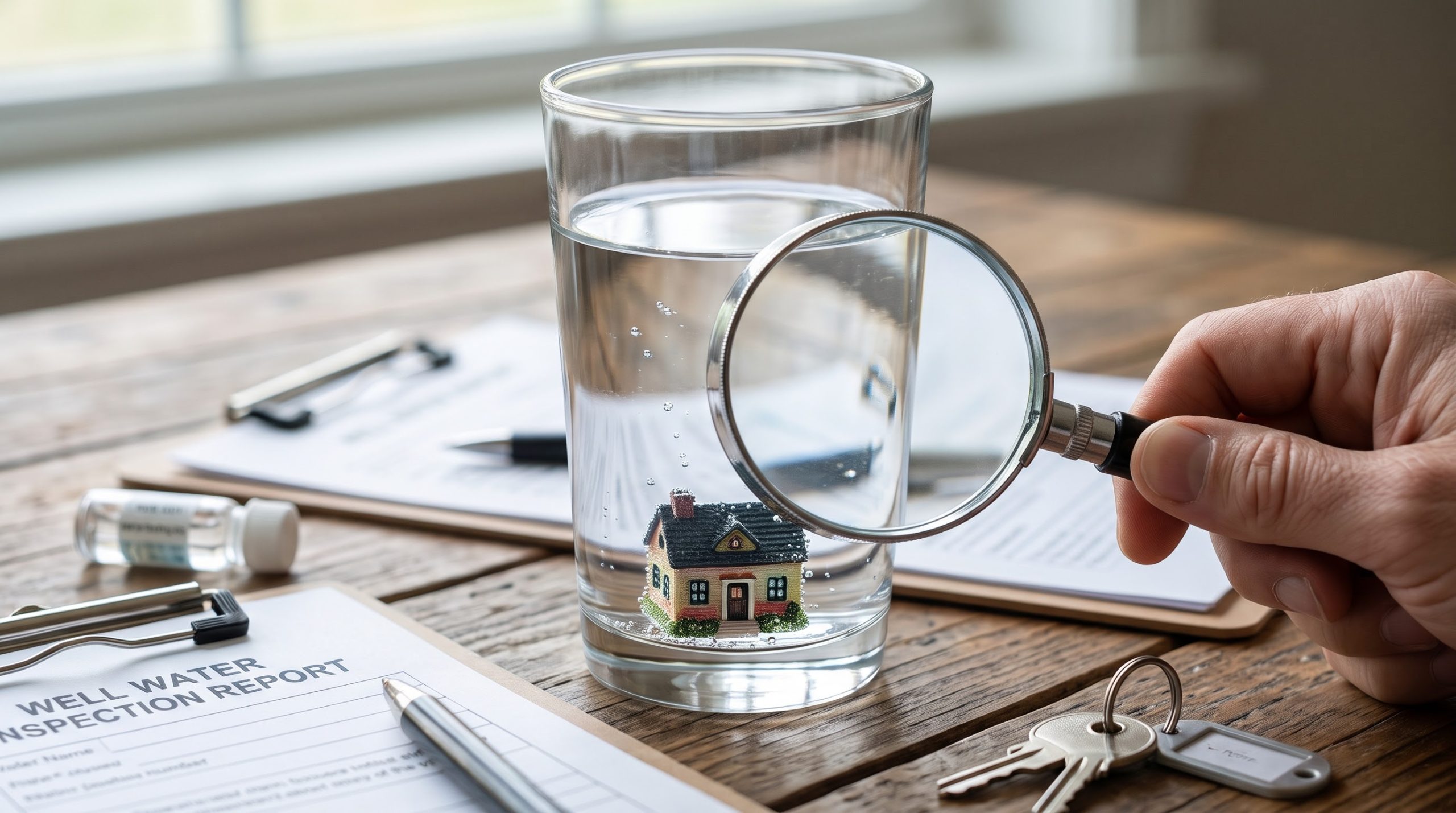
You found the house. The kitchen is bright, the yard backs onto trees, and the offer was accepted. Then the inspector mentions three words that stop the celebration: “It’s on well.”
If the home isn’t connected to a city water line, nobody has been checking that water for you. No utility sends an annual quality report. No agency tests the tap. Whatever comes out of that faucet is your responsibility the day you get the keys, and it may be your problem sooner, because lenders, inspectors, and your own good sense will all want answers before closing.
This guide covers well water testing for home buyers from start to finish. You’ll learn why the test matters, who usually pays for it, when a mortgage lender will insist on one, which contaminants turn up most often, and how the whole thing fits into a normal closing timeline. There’s also a practical buying a house with a well checklist you can print and take to your next showing.
The tone here is calm on purpose. Most well tests come back fine, or with problems that have routine fixes. The goal is simply to find out which group your future home belongs to while you still have leverage.
Affiliate disclosure: Some links on this page are Amazon affiliate links. As an Amazon Associate, we earn from qualifying purchases at no extra cost to you. Read our full affiliate disclosure.
Do you need a well water test when buying a house?
Yes. Private wells are not regulated by the EPA, so no one tests them for you. A real estate well water test should cover, at minimum, total coliform and E. coli bacteria, nitrate and nitrite, and usually arsenic, lead, and pH. FHA, VA, and USDA loans often require testing, and the buyer typically pays for it, though that is negotiable. Schedule it during your inspection contingency so you can still renegotiate or walk away.
Ready to test? For a home purchase, a mail-in kit analyzed by a certified lab is the most dependable option. Two popular choices on Amazon are the Tap Score Advanced Home Water Test Kit and the Safe Home Premium mail-in water test kit. For a quick first screening, there’s the Watersafe Well Water Test Kit. Ask your lender what they accept before you buy.
Why Well Water Testing Matters When You Buy a Home
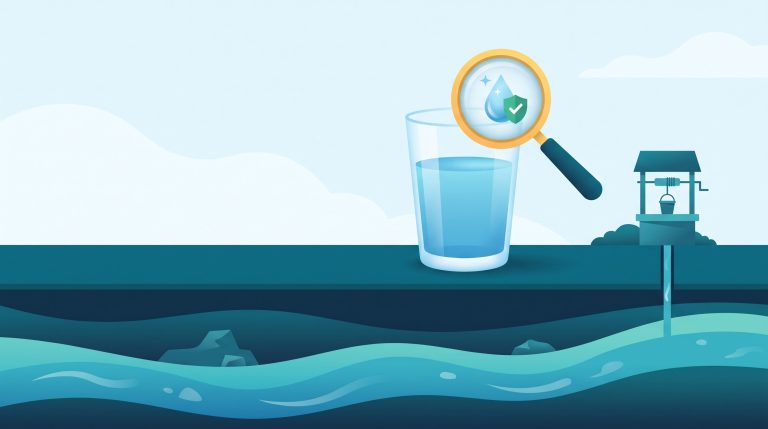
City water comes with a safety net. Public systems are tested on a schedule, and they must follow federal standards under the Safe Drinking Water Act. Private wells sit outside that system. The EPA does not set or enforce rules for them, and in most places state and local governments leave the testing decision to the owner.

That makes the home sale one of the few natural checkpoints. It’s the moment a stranger’s well becomes yours, and you get a short window to find out what you’re inheriting.
Nobody is testing the water for you
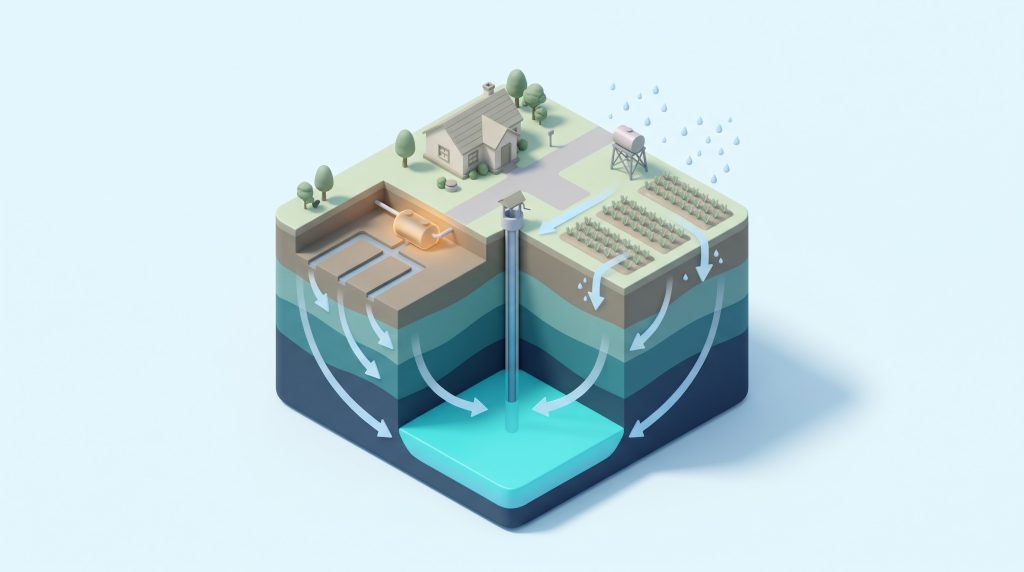
A seller may say the water “tastes great” or that the family has drunk it for twenty years. That’s useful, but it isn’t data. Many serious contaminants have no taste, color, or smell. Bacteria can appear after a heavy rain. Nitrate from fertilizer or a failing septic system can creep up slowly. Arsenic and uranium come from the rock itself and can be present in a clear glass of water that looks perfect.
A lab report replaces guesswork with numbers. It also gives you something concrete to hand the seller if a problem turns up.
What a failed result can cost
Most problems have a fix. The question is how much it costs and who covers it. As a rough range, a whole-house treatment system for iron, hardness, or sulfur smell might run from a few hundred to a few thousand dollars. Arsenic removal, UV disinfection, or a reverse osmosis system can sit in the same range. A well that needs repair, a new pump, or a replacement can reach five figures.
Discovering a $4,000 problem before closing gives you options. Discovering it after closing gives you a bill. That difference is the whole reason this test exists.
For more on how wells become contaminated and how to protect yours, see the EPA’s guide to protecting your home’s water.
Who Pays for a Real Estate Well Water Test: Buyer or Seller?
In most of the country, the buyer pays for inspections and testing as part of due diligence. That includes the well water test, the septic inspection, and the general home inspection. It’s the default, not a rule. Everything in a purchase contract is negotiable.
Here is how it usually plays out:
- Buyer pays (most common). You order the test during the inspection period and cover the lab fees. Expect a basic bacteria and nitrate panel to cost around $50 to $150, and a broader panel to run a few hundred dollars or more, depending on your region and the lab.
- Seller pays (sometimes). In a slow market, or if the seller’s own test is old or failed, a seller may agree to cover testing or any needed treatment. You can ask for this in your offer.
- Split or credit. Some deals handle it through a closing credit, a price adjustment, or a repair agreement after results come in.
- Required by local rules. A small number of states and counties require testing when a property with a private well is sold. New Jersey, for example, requires well testing as part of a property sale. Check with your county health department or your agent about requirements in your state or county.
One more point worth knowing: even when a seller hands you a recent test, many buyers order their own. A seller’s report may be months old, may have tested fewer contaminants, or may have used a sampling method you can’t verify. A fresh sample that you control, or that your inspector collects, is easier to trust.
Do Mortgage Lenders Require a Well Water Test?
It depends on your loan type, your lender, and your state. The short version is that government-backed loans are the most likely to require a test, and conventional lenders vary.
FHA, VA, and USDA loans
These programs set minimum property standards, and a private water supply has to meet them. In practice that means:
- FHA loans: The property must have a safe water supply. Appraisers and lenders commonly require a bacteria test (total coliform) plus nitrate and nitrite, and local health authorities can add further requirements, such as lead or other local contaminants.
- VA loans: The well must provide safe, potable water, and the lender or VA appraiser may ask for a test and for evidence of proper distance between the well and the septic system.
- USDA loans: Rural housing loans commonly involve wells, and the lender will usually want proof that the water meets health standards.
The details change by state and by lender, so ask your loan officer for the exact list in writing. Don’t assume your regular inspector’s panel will satisfy it.
Conventional loans
Conventional lenders often don’t mandate a well test on paper, but many still ask for one, especially in areas where contamination is a known concern. Even when the bank doesn’t care, you should. A mortgage lender protects its collateral. A test protects your family.
A practical warning about lender-required tests
If your lender requires testing, the sample often has to be collected by an approved third party and analyzed by a state-certified laboratory. A home test kit that you collect yourself is a great way to screen a property early or to double-check results. It may not replace a formal lender-required test. Ask your loan officer which route they accept before you spend money.
What a Well Water Test Checks For: Common Contaminants
Not every test looks for the same things. A basic screening is cheap and fast. A full panel costs more but covers the problems that are quietly common in private wells. The table below summarizes what buyers most often see.
| Contaminant | Why it matters | Common benchmark |
|---|---|---|
| Total coliform and E. coli | Signs of bacterial contamination, possibly from surface water or sewage | Should be absent |
| Nitrate and nitrite | Linked to infant health risk (blue baby syndrome); often from fertilizer or septic systems | Nitrate: 10 mg/L (as nitrogen) |
| Arsenic | Naturally occurring in some rock; long-term exposure raises cancer risk | 10 µg/L |
| Lead | Often enters from old plumbing, not the aquifer; no known safe level | EPA action level 15 µg/L |
| pH | Low pH can corrode pipes and release metals | 6.5 to 8.5 (guideline) |
| Iron and manganese | Stain fixtures, add metallic taste; mostly cosmetic | Iron 0.3 mg/L, manganese 0.05 mg/L (guidelines) |
| Hardness | Scale buildup in pipes and water heaters | Not health-based |
| Radon and uranium | Occur naturally in some geologies | Region-specific |
| VOCs, pesticides, PFAS | Linked to industrial, agricultural, or landfill sources | Varies by compound |
The core panel every buyer should get
If you only test for a few things, start here:
- Total coliform and E. coli bacteria. The most common reason lenders reject a well. A positive result doesn’t always mean the water is dangerous forever. Often it means the well needs disinfection and a closer look at the casing, cap, and nearby septic. A retest after treatment tells you whether the fix worked.
- Nitrate and nitrite. Especially important if there are babies or pregnant people in your household, since high nitrate is a particular concern for infants under six months.
- Arsenic. You can’t see it or taste it, and levels vary wildly between neighboring wells.
- Lead. Older homes may have lead solder or fixtures even when the well water itself is clean.
- pH, hardness, iron, and manganese. These explain staining, odd tastes, and plumbing wear, and they help you choose the right treatment.
Add-ons worth considering by region
Your local geology and land use should shape the order form. Ask the county health department or a local well driller what turns up in your area.
- Radon and uranium in granite and certain bedrock regions.
- Fluoride where it occurs naturally at high levels.
- Pesticides and VOCs near farms, gas stations, dry cleaners, or old industrial sites.
- PFAS near airports, military bases, fire training sites, or certain landfills. Federal drinking water limits for PFOA and PFOS apply to public systems, but they’re a useful yardstick for a private well. Check the current EPA numbers when you review results.
- Sulfate, chloride, and sodium near roads and coastlines.
There’s a reason experienced inspectors say, “test for what’s local.” A test panel that is perfect for rural Iowa may miss the thing that matters most in coastal Maine.
Skip the guesswork. A certified-lab kit such as the Tap Score Advanced Home Water Test Kit covers a wide range of contaminants, so you can compare the report against the risks in your region. Confirm with your lender and agent that a mail-in kit is acceptable before you order.
Your Buying a House With a Well Checklist
Water quality is one piece. A well is a system, and the system has parts. Use this buying a house with a well checklist during showings, your inspection period, and your closing prep.
Before you make an offer
- Ask the seller or agent for the well’s age, depth, and any repair history.
- Request any past water test results and the date of each one.
- Ask where the septic system and drain field are located, and how old they are.
- Look at the property. Is the well cap sealed and above ground level? Is the land sloped away from the wellhead?
- Note nearby risks: livestock, farms, fuel tanks, old dumps, or a neighbor’s failing septic.
During your inspection contingency
- Write the test into the contract. Make the sale contingent on satisfactory well water results and a flow test, so you can negotiate or withdraw.
- Hire a qualified professional. A licensed well contractor or a certified home inspector who handles wells can pull samples correctly. A bad sample gives bad data.
- Order a flow (yield) test. It measures how many gallons per minute the well delivers and how it holds up over time. Many professionals look for enough sustained flow to support a typical household, commonly cited around 3 to 5 gallons per minute, though your needs may differ.
- Inspect the equipment. Pump, pressure tank, wellhead, casing, and electrical connections all age. Ask the inspector for an honest estimate of remaining life.
- Check the septic system. Separate from the water test, but closely tied to it. A failing septic system can contaminate a well.
- Look at the existing treatment. Softeners, UV lights, filters, and reverse osmosis units need maintenance. Ask when filters and lamps were last changed and who services them.
Before closing
- Review all lab reports with your agent, inspector, and, if needed, a water treatment specialist.
- Negotiate repairs, treatment installation, or a credit for anything that failed.
- Retest after any shock chlorination or repair.
- Collect manuals, service records, and contact information for the contractors who’ve worked on the system.
Timeline: From Offer to Closing
The number one reason buyers run into trouble isn’t bad water. It’s bad timing. Many contracts give you roughly 7 to 14 days for inspections, and some lab results take longer than that. Here is a realistic high-level schedule.
| When | What to do |
|---|---|
| Day 0: offer accepted | Confirm your contingency period. Ask your loan officer what water tests the lender requires. |
| Days 1 to 3 | Book your home inspector, a well professional, and a certified lab. Ask the lab when their sample drop-off days are. |
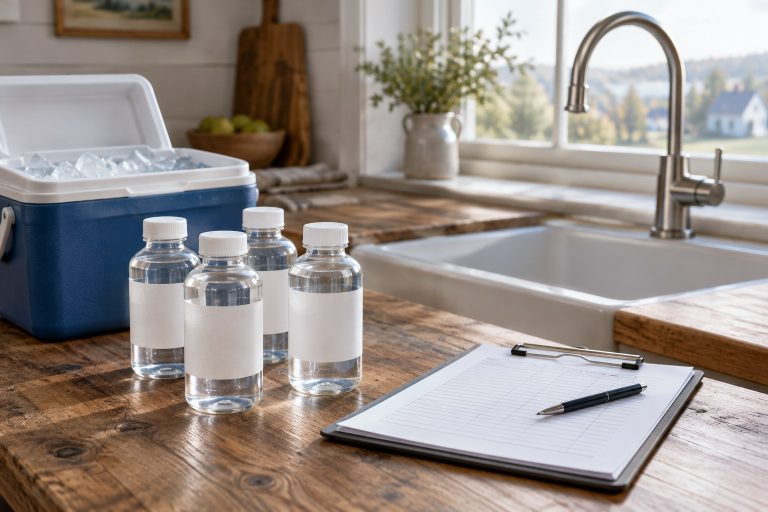
| Days 3 to 7 | Collect samples. Bacteria samples have a short shelf life, often 24 to 30 hours from collection to lab receipt, so many labs only take them early in the week. |
| Days 7 to 14 | Results arrive. Bacteria tests commonly take a couple of days. Broader panels with metals, radon, or PFAS can take a week or more. |
| Days 10 to 20 | Review results and negotiate. If a problem appears, request treatment, credits, or a price change. |
| Days 20 to closing | Install or schedule treatment, retest if needed, and confirm your lender’s requirements are met. |

If your contingency window is short, say so early. A few extra days, requested in writing, can be the difference between a thoughtful decision and a rushed one.
How to Read Your Results and What Comes Next
A lab report can look intimidating. Most of it is straightforward once you know the layout.
Each line lists the contaminant, your result, the unit, and a standard to compare it against. If a number is above the benchmark, that’s a flag to ask about, not automatically a reason to run.
Problems that are usually fixable
- Positive coliform bacteria: Often handled by shock chlorination, repairing a cracked cap or casing, and then retesting. If E. coli shows up, treat it seriously and don’t drink the water until it’s resolved.
- High iron, manganese, or hardness: Water softeners, oxidizing filters, and similar systems handle these well.
- Low pH: Neutralizing filters raise pH and protect plumbing.
- Arsenic and nitrate: Point-of-use reverse osmosis or specialized media can reduce them. A treatment specialist can match the system to your actual numbers.
Problems that deserve a harder look
- Repeated bacterial contamination after treatment.
- Very high nitrate, which can point to septic or agricultural contamination nearby.
- Industrial solvents or PFAS, where the source may be off your property and outside your control.
- A well that runs dry, produces silty water, or can’t keep up with household use.
In those situations, talk with your agent and attorney about whether to renegotiate, request a long-term fix as a condition of sale, or walk away. Your contingency is your leverage, and this is when it’s worth using.
For background on specific contaminants and treatment options, start with the EPA’s private wells resources.
Frequently Asked Questions
How much does well water testing cost for a home buyer?
A basic bacteria and nitrate screening often costs between $50 and $150. A broader panel that adds metals, minerals, and other contaminants commonly runs a few hundred dollars. Specialty tests such as PFAS or pesticides can cost more. Pricing varies by lab and region.
How long does a well water test take?
Bacteria results typically take 24 to 72 hours after the lab receives the sample. Full chemical panels can take one to two weeks. Plan your timeline around the slowest test you need.
Can I test the well water myself, or do I need a professional?
You can collect your own sample with a quality test kit, and it’s a smart way to screen a home you’re serious about. For lender-required testing or contract-based results, you may need a certified lab and a sample collected by a qualified third party. Check with your lender and agent first.
What happens if the well water fails the test?
You have choices. Many problems can be corrected with disinfection, filtration, or repairs, and you can ask the seller to pay for them or lower the price. If the problem is severe or the cost is unclear, your inspection contingency may let you cancel the contract. An attorney or agent in your state can explain your rights.
How often should I test well water after I move in?
Test at least once a year for bacteria, nitrate, and total dissolved solids, and test again after any flooding, nearby construction, well repair, or a noticeable change in taste, color, or smell. Every few years, run a broader panel.
Conclusion: Test Before You Close, Then Test Every Year
Buying a home with a private well isn’t a red flag. Millions of families rely on wells and enjoy excellent water. It just means the usual safety net is yours to build. A real estate well water test during your inspection period is the simplest way to build it, and it costs a small fraction of what a surprise repair would.
To recap: schedule your testing the moment your offer is accepted, ask your lender exactly what it requires, cover the core panel plus local risks, use a checklist for the well and septic system, and treat your contingency window as the time to settle any questions. After you move in, keep testing every year.
If you want to start screening a property right now, a certified-lab well water test kit or a quick home screening kit gives you a clear picture of the water before you commit.
Know what’s in the water before you sign. Protect your family and your purchase by testing first. Compare certified-lab well water test kits on Amazon.
This article is for general education and isn’t legal, medical, or financial advice. Testing rules and drinking water standards vary by state and change over time, so confirm current requirements with your lender, local health department, and a licensed professional.





A thoroughly well-researched and insightful analysis on “well water testing for home buyers the complete”. Looking forward to reading more of your insightful perspectives and follow-up work on this topic!
[…] or selling a property, a lab report is not optional. Lenders and buyers want certified numbers. Our well water testing guide for home buyers explains which tests lenders usually require before […]
Great post, well Done dude
[…] step-by-step well water sampling and lab guide. If you are buying a house with a well, read the well water testing guide for home buyers before closing, since softener sizing can become a negotiation […]
[…] the bigger picture, see our complete well water testing guide for home buyers and the general step-by-step well sampling, labs, and results […]
[…] water testing checklist for home sales. Everyone else closing on a rural property should read the complete guide to well water testing for home buyers before the inspection window […]
[…] with a well? Lenders and buyers want certified numbers, and the testing window is short. See our well water testing guide for home buyers, or, for Rhode Island sales, the 10-day home sale checklist for […]
[…] well owners should run a baseline lab test now, while you still know what normal looks like. Start with our step-by-step well testing guide […]